Before highways, fence lines, and urban sprawl, vast herds of sheep, goats, and cattle moved freely across the land — grazing, fertilizing, and maintaining ecosystems in a natural rhythm that had worked for thousands of years. At Goats at Work, we're bringing that ancient practice back to Barrie, Orillia, and Simcoe County. And it turns out, the land still responds the same way it always has.

The Problem: A Landscape Under Pressure

Ontario's landscape is changing fast. Urban centres are expanding, invasive plant species are spreading unchecked, and the small family farms that once naturally managed the land through grazing are disappearing. The result? Overgrown properties, degraded ecosystems, and a growing demand for land management solutions that actually work — without the environmental cost.

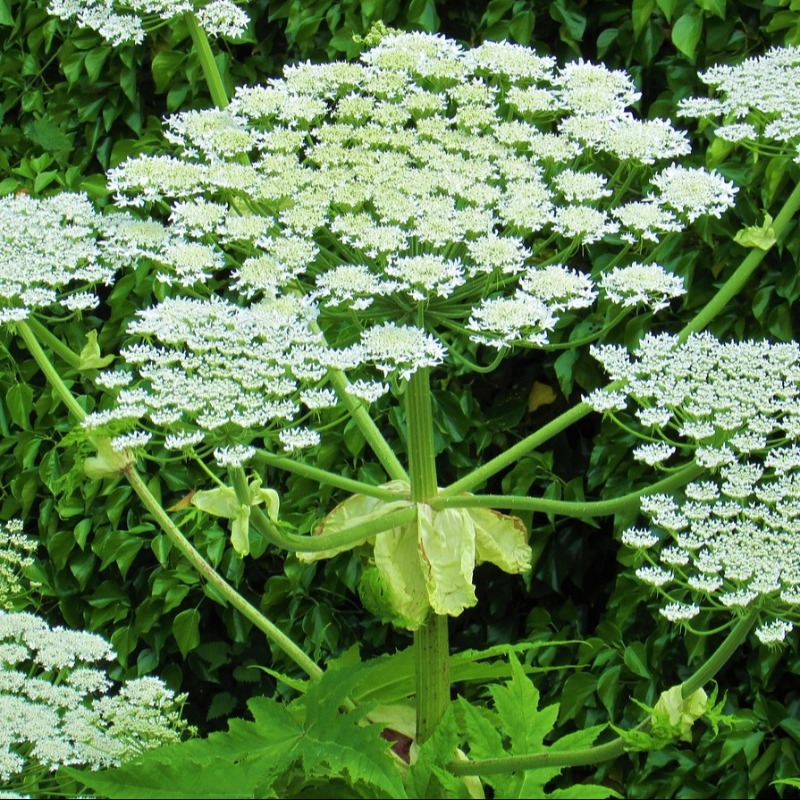
The traditional answers — herbicides and heavy machinery — are increasingly falling out of favour. Landowners, municipalities, and conservation authorities across Simcoe County are actively looking for greener alternatives. Invasive species like Phragmites, Wild Parsnip, Dog-Strangling Vine, Garlic Mustard, Giant Hogweed, and Buckthorn are spreading across the region, and chemical control is proving both costly and controversial.

The Challenge with Conventional Methods

Herbicides

Chemical treatments raise environmental and health concerns, are banned in some residential zones, and often require repeated applications without addressing root causes.

Heavy Machinery

Mechanical clearing is expensive, damages soil structure, and simply cannot access steep slopes, rocky terrain, riparian areas, or densely overgrown sites safely.

Manual Labour

Hand clearing is slow, physically demanding, and often dangerous — particularly with toxic species like Wild Parsnip and Giant Hogweed common across Simcoe County.

The Solution: Targeted Grazing — aka Goatscaping

Enter targeted grazing — also known as goatscaping, prescribed grazing, or conservation grazing. It's not a new idea. It's actually one of the oldest land management tools in human history, and it's making a powerful comeback for one simple reason: it works.

The practice of transhumance — seasonally moving livestock across the land to graze — was once the backbone of land stewardship across Europe, the Middle East, and beyond. Herds of sheep, goats, and cattle mimicked the natural movements of wild bison, reindeer, and caribou, keeping vegetation in check, building soil health through natural fertilization, and maintaining ecosystems in a state of productive balance.

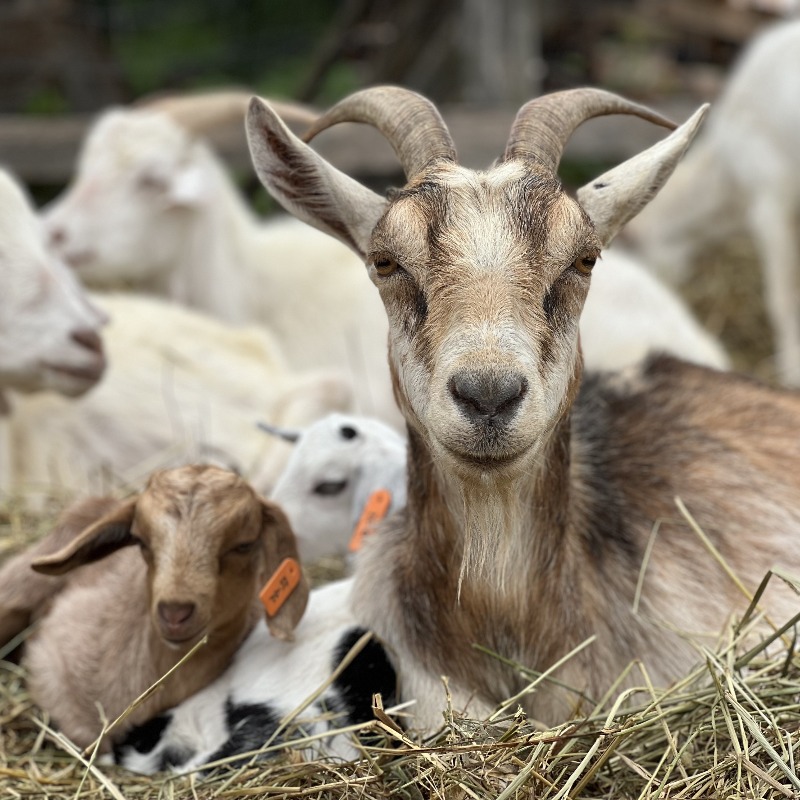
Today, our herd of 100+ purebred Kiko goats does exactly the same thing — just with a shepherd, a border collie named Cowboy Craig, and a team of Maremma livestock guardian dogs keeping everything running smoothly.

Why Goats Are Nature's Best Land Management Tool

They Go Where Machines Can't

Steep slopes, rocky outcroppings, dense brush, and wet riparian areas along Ontario's waterways are no problem for a goat. They're sure-footed, adaptable, and tireless.

They Target the Right Plants

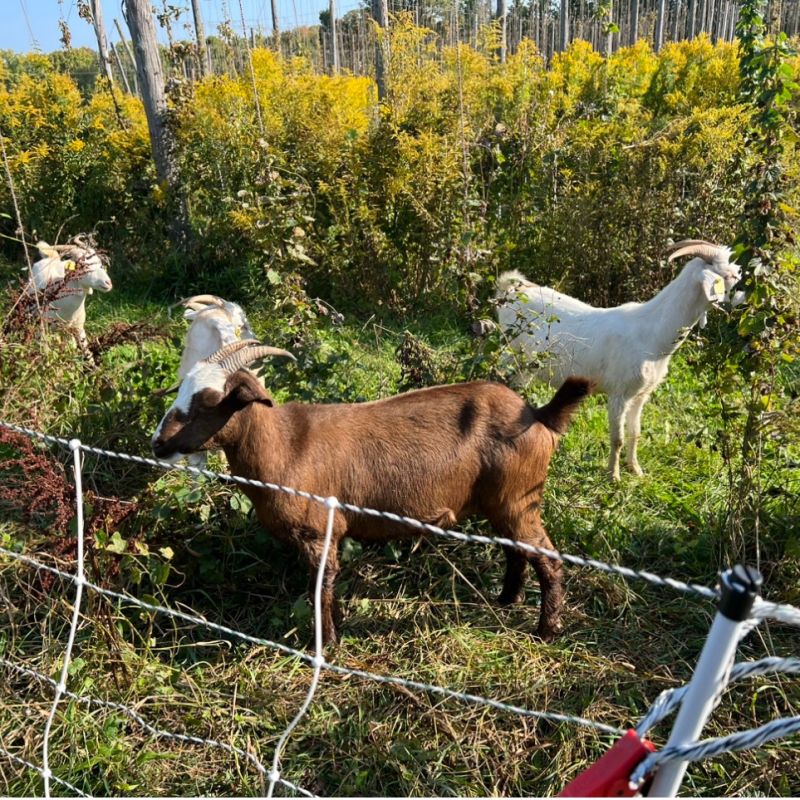
Goats naturally prefer brush, woody plants, and invasive species — exactly what landowners want removed. They'll tackle Phragmites, Buckthorn, Wild Parsnip, Garlic Mustard, and more.

They Leave the Land Better

As they graze, goats naturally fertilize the soil. No chemicals, no compaction, no damage to the ecosystem. Just a healthier, more balanced piece of land when the job is done.

What Goatscaping Looks Like in Real Life

Picture an overgrown backyard so thick you can't see your own fence line. Within minutes of our herd arriving, the property starts to take shape. The goats get to work immediately, and in no time you start seeing things that had been swallowed up for years — old yard tools buried under poison ivy, a lawn chair you forgot you left out, a coffee mug tipped on its side, a hammer you were sure you'd put away.

From backyards in Barrie to vacant lots in Orillia, riparian areas along Simcoe County waterways, steep slopes, commercial properties, parks, schools, and municipal land — our goats can handle it all. The before and after photos are truly incredible. And as Dan likes to say: there's nothing quite like watching 30 to 100 goats transform a piece of land — except maybe the cold beer when the job is done.

Properties We Serve

  • ✔  Residential yards and acreages — Barrie, Orillia, Coldwater and surrounding area
  • ✔  Commercial and industrial properties
  • ✔  Municipal land, parks, and school grounds
  • ✔  Steep slopes and rocky terrain inaccessible by machinery
  • ✔  Riparian areas — riversides, ditches, and waterways across Simcoe County
  • ✔  Conservation areas and naturalization projects
  • ✔  Vacant lots and abandoned properties

Why We Do This — Dan's Answer

For Dan, the why goes beyond the business case. It's about carrying forward something ancient and meaningful — a way of working with the land, not against it. A way of life rooted in respect for animals, ecosystems, and the communities that depend on both.

The small farmer is disappearing. Urban development, government infrastructure, and mass housing projects are pushing out grazing lands and making traditional animal movement harder every year. Transhumance — the seasonal movement of livestock that sustained landscapes for millennia — is becoming increasingly rare.

At Riverside Ranch in Coldwater, and on every job site across Barrie, Orillia, and Simcoe County, Goats at Work is doing its small part to keep that tradition alive. And with every overgrown property restored — chemical-free, naturally, and with a herd of hungry Kikos — it makes a little more sense why.

"We love goatscaping, and we can't wait to have our goats go to work for you. Leave it to nature's pros — the G.O.A.T.s — to get the job done."

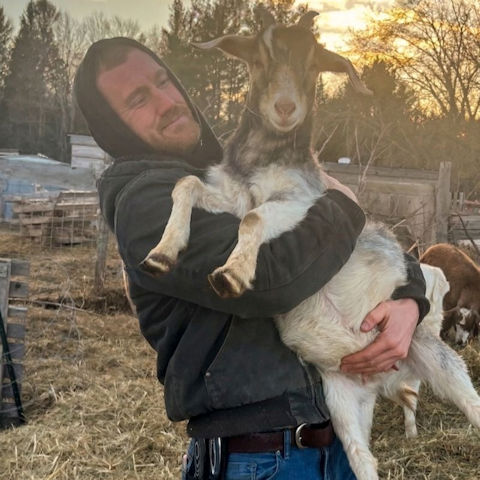
Dan, Shepherd & Owner, Goats at Work